

What is the suction lift of a residential well pump?
As a supplier of Residential Well Pump, I often encounter customers who are curious about various technical aspects of well pumps. One of the most frequently asked questions is about the suction lift of a residential well pump. In this blog post, I will delve into the concept of suction lift, its importance, factors affecting it, and how it relates to the performance of your residential well pump.
Understanding Suction Lift
Suction lift refers to the vertical distance that a pump can draw water from a source, such as a well or a reservoir, up to the pump itself. It is measured in feet or meters and represents the maximum height from which the pump can effectively lift water. In a residential well pump system, suction lift is a critical parameter as it determines the pump's ability to access water from underground sources.
To understand suction lift better, let's consider a simple analogy. Imagine you are trying to drink water from a glass using a straw. The maximum height you can lift the water through the straw is limited by the pressure difference between the atmosphere and the pressure inside the straw. Similarly, a well pump creates a pressure difference to draw water up from the well. The suction lift is the maximum height that the pump can overcome this pressure difference to lift the water.
Importance of Suction Lift
The suction lift of a residential well pump is crucial for several reasons. Firstly, it determines the depth of the well from which the pump can draw water. If the suction lift of the pump is insufficient, it will not be able to lift water from deeper wells, resulting in a lack of water supply. This can be a significant problem, especially in areas where the water table is deep.
Secondly, the suction lift affects the efficiency of the pump. A pump with a higher suction lift can draw water from deeper wells, which may require less energy to pump the water to the surface. On the other hand, a pump with a lower suction lift may need to be placed closer to the water source, which can increase the installation cost and may not be feasible in some situations.
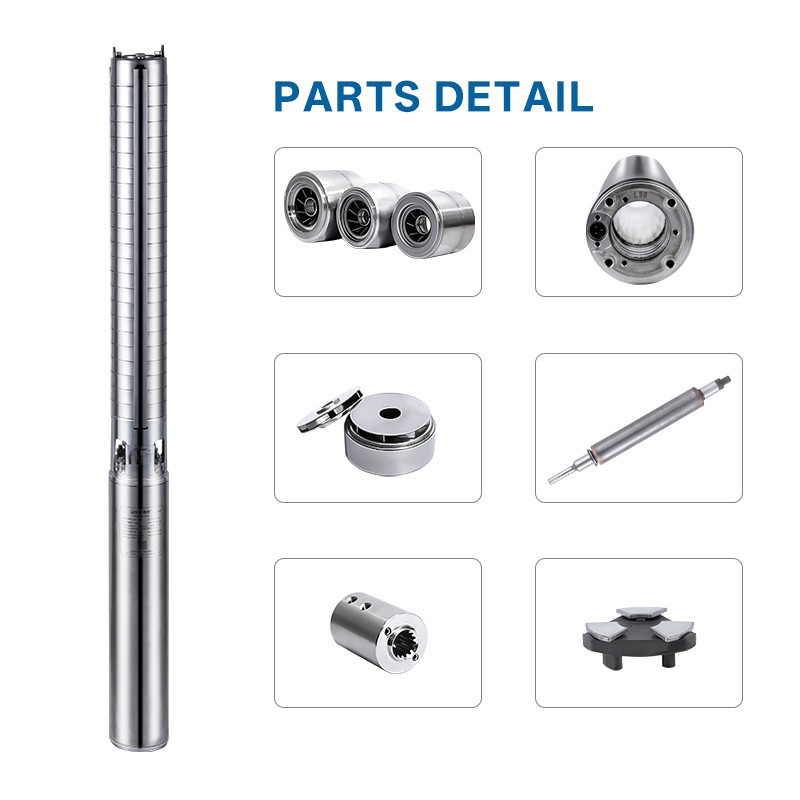

Finally, understanding the suction lift is essential for proper pump selection. When choosing a residential well pump, it is important to consider the depth of the well, the water demand, and the suction lift requirements. Selecting a pump with the appropriate suction lift ensures that the pump will operate efficiently and provide a reliable water supply.
Factors Affecting Suction Lift
Several factors can affect the suction lift of a residential well pump. These factors include:
- Atmospheric Pressure: The atmospheric pressure at the pump location plays a significant role in determining the suction lift. At sea level, the atmospheric pressure is approximately 14.7 pounds per square inch (psi), which corresponds to a maximum suction lift of about 33.9 feet (10.3 meters). As the altitude increases, the atmospheric pressure decreases, reducing the maximum suction lift. For example, at an altitude of 5,000 feet (1,524 meters), the atmospheric pressure is about 12.2 psi, which reduces the maximum suction lift to about 27.9 feet (8.5 meters).
- Water Temperature: The temperature of the water also affects the suction lift. As the water temperature increases, the vapor pressure of the water increases, which reduces the maximum suction lift. This is because the pump needs to create a lower pressure to draw the water up, and the higher vapor pressure makes it more difficult to create this pressure difference. For example, at a water temperature of 100°F (37.8°C), the maximum suction lift is about 25 feet (7.6 meters), compared to about 33.9 feet (10.3 meters) at a water temperature of 60°F (15.6°C).
- Pipe Friction: The friction loss in the suction pipe can also reduce the suction lift. As the water flows through the pipe, it encounters resistance from the pipe walls, which causes a pressure drop. The longer the pipe and the smaller the pipe diameter, the greater the friction loss. To minimize friction loss, it is important to use a pipe with a large enough diameter and keep the pipe as short as possible.
- Pump Design: The design of the pump itself can also affect the suction lift. Different types of pumps have different suction lift capabilities. For example, centrifugal pumps typically have a lower suction lift compared to positive displacement pumps. Additionally, the impeller design, the number of stages, and the pump speed can all affect the suction lift.
Suction Lift and Pump Performance
The suction lift of a residential well pump is closely related to its performance. A pump with a higher suction lift can draw water from deeper wells, which can increase the water supply and improve the efficiency of the pump. However, it is important to note that the suction lift is not the only factor that affects the pump performance. Other factors, such as the flow rate, the head pressure, and the power consumption, also need to be considered.
When selecting a residential well pump, it is important to choose a pump that can meet your specific water demand and suction lift requirements. A pump that is too small may not be able to provide enough water, while a pump that is too large may consume more energy than necessary. It is also important to ensure that the pump is installed correctly and maintained regularly to ensure optimal performance.
Our Residential Well Pump Solutions
At our company, we offer a wide range of Residential Well Pump solutions to meet the diverse needs of our customers. Our pumps are designed to provide reliable and efficient water supply for residential applications. We offer both submersible and above-ground pumps, as well as Solar Well Pump System for environmentally friendly and cost-effective water pumping.
One of our popular products is the Stainless Steel Submersible Water Pump. This pump is made of high-quality stainless steel, which makes it durable and resistant to corrosion. It has a high suction lift and can draw water from deep wells. The pump is also energy-efficient, which can help you save on your electricity bills.
We also offer custom pump solutions to meet your specific requirements. Our team of experts can help you select the right pump for your well depth, water demand, and suction lift requirements. We can also provide installation and maintenance services to ensure that your pump operates smoothly and efficiently.
Contact Us for Procurement and Consultation
If you are interested in purchasing a residential well pump or have any questions about suction lift or pump performance, please do not hesitate to contact us. Our friendly and knowledgeable sales team is ready to assist you with your procurement needs and provide you with professional advice. We can help you choose the right pump for your specific situation and ensure that you get the best value for your money.
Whether you are building a new home, upgrading your existing well pump system, or simply looking for a reliable water supply solution, we have the expertise and products to meet your needs. Contact us today to start the conversation and take the first step towards a reliable and efficient water supply for your home.
References
- ASPE Plumbing Engineering Design Handbook. American Society of Plumbing Engineers.
- Pump Handbook. Karassik, I. J., et al. McGraw-Hill Education.
- Water Well Journal. National Ground Water Association.


