

Hey there! As a supplier of Underground Well Pump, I've gotten tons of questions about how these things work, especially the starting mechanism. So, I thought I'd break it down for you in a way that's easy to understand.
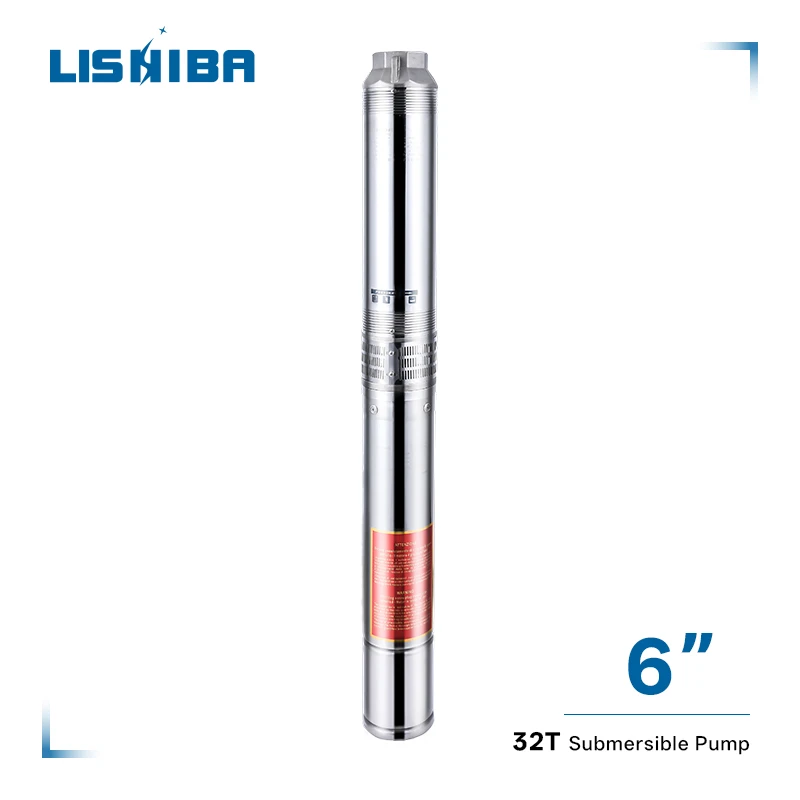
First off, let's talk about what an underground well pump is. It's a type of Submersible Well Pump that's designed to be placed deep inside a well. These pumps are super important for getting water from underground sources, like wells, up to the surface for all sorts of uses, from watering your garden to supplying water to your home.
Now, the starting mechanism of an underground well pump is crucial. It's what gets the whole thing going and ensures that water starts flowing. There are a few different types of starting mechanisms, and I'll go over the most common ones.
Capacitor-Start Motors
One of the most popular starting mechanisms is the capacitor-start motor. This type of motor uses a capacitor to give the pump an extra boost when it's starting up. The capacitor stores electrical energy and releases it quickly to help the motor get going.

Here's how it works. When you turn on the pump, an electrical current flows to the motor. The capacitor is connected to the motor's starting winding. As the current flows through the capacitor, it creates a phase shift in the electrical current. This phase shift creates a rotating magnetic field in the motor, which helps the motor start turning.
Once the motor reaches a certain speed, a centrifugal switch kicks in. This switch disconnects the capacitor from the starting winding, and the motor continues to run on its main winding. The capacitor-start motor is great because it provides a high starting torque, which means it can start the pump even when there's a lot of resistance, like when the well is deep or the water pressure is high.
Split-Phase Motors
Another common starting mechanism is the split-phase motor. This type of motor doesn't use a capacitor. Instead, it has two windings: a main winding and a starting winding. The starting winding has a higher resistance than the main winding.
When you turn on the pump, an electrical current flows through both windings. Because the starting winding has a higher resistance, it creates a phase shift in the electrical current. This phase shift creates a rotating magnetic field in the motor, which helps the motor start turning.
Once the motor reaches a certain speed, a centrifugal switch disconnects the starting winding from the circuit. The motor then continues to run on its main winding. Split-phase motors are simpler and less expensive than capacitor-start motors, but they have a lower starting torque. So, they're better suited for shallower wells or applications where the starting resistance isn't too high.
Permanent Split Capacitor (PSC) Motors
The permanent split capacitor (PSC) motor is a bit different. It uses a capacitor that's permanently connected to the motor's starting winding. Unlike the capacitor-start motor, there's no centrifugal switch to disconnect the capacitor.
When you turn on the pump, the capacitor creates a phase shift in the electrical current, which helps the motor start turning. The motor then continues to run with the capacitor connected to the starting winding. The PSC motor is more efficient than the split-phase motor, but it has a lower starting torque than the capacitor-start motor.
Pressure Switches
In addition to the motor starting mechanism, most underground well pumps also use a pressure switch. The pressure switch is connected to the water system and monitors the water pressure.
When the water pressure drops below a certain level, like when you turn on a faucet in your home, the pressure switch sends a signal to the pump to start. The pump then starts up using its starting mechanism and begins pumping water to increase the pressure in the system.
Once the water pressure reaches a certain level, the pressure switch sends another signal to the pump to stop. This cycle repeats every time the water pressure drops or rises.
Our LISHIBA 6SJ Series
At our company, we offer the LISHIBA 6SJ Series, which is a top-selling high-quality pump for multiple usage scenarios. This pump uses a capacitor-start motor, which provides a high starting torque and ensures reliable starting, even in tough conditions.
The LISHIBA 6SJ Series is also designed with a durable construction and high-quality components, which means it can last for a long time with minimal maintenance. Whether you need a pump for your home, farm, or industrial application, the LISHIBA 6SJ Series is a great choice.
Why Choose Us
As a supplier of underground well pumps, we're committed to providing our customers with the best products and services. We have a team of experts who can help you choose the right pump for your needs and provide you with installation and maintenance support.
We also offer competitive prices and fast shipping, so you can get your pump quickly and start using it right away. If you have any questions or need more information about our products, don't hesitate to contact us. We're here to help you find the perfect underground well pump for your needs.
Conclusion
The starting mechanism of an underground well pump is an important part of the pump's operation. Whether it's a capacitor-start motor, split-phase motor, or PSC motor, each type has its own advantages and disadvantages. Understanding how these starting mechanisms work can help you choose the right pump for your needs.
If you're in the market for an underground well pump, check out our LISHIBA 6SJ Series. It's a high-quality pump that's designed to provide reliable performance in multiple usage scenarios. And if you have any questions or want to discuss your specific requirements, feel free to reach out. We're always happy to help you with your pump needs and look forward to discussing potential purchases with you.
References
- Electric Motor Handbook, various editions
- Pump Systems Matter, industry reports on pump starting mechanisms


