

As a supplier of Submersible Well Pumps, I often receive inquiries from customers about various aspects of our products, and one question that comes up quite frequently is: "What is the noise level of a submersible well pump?" In this blog post, I'll delve into this topic, exploring the factors that influence the noise level of submersible well pumps, how to measure it, and what you can expect from our pumps.
Understanding Submersible Well Pumps
Before we discuss the noise level, let's briefly understand what a submersible well pump is. A submersible well pump is a type of pump that is designed to be submerged in water, typically in a well. It works by pushing water to the surface rather than pulling it, which makes it more efficient and less prone to cavitation compared to other types of pumps. Submersible well pumps are commonly used for residential, commercial, and agricultural applications, such as providing water for homes, irrigation systems, and industrial processes.
Our company offers a range of high - quality submersible well pumps, including the 6SJ Best - Selling Water Pump By LISHIBA | Premium Quality For Diverse Applications and Underground Well Pump. These pumps are known for their reliability, efficiency, and durability, and they are suitable for a variety of water supply needs.
Factors Affecting the Noise Level of Submersible Well Pumps
The noise level of a submersible well pump can be influenced by several factors:
1. Pump Design and Construction
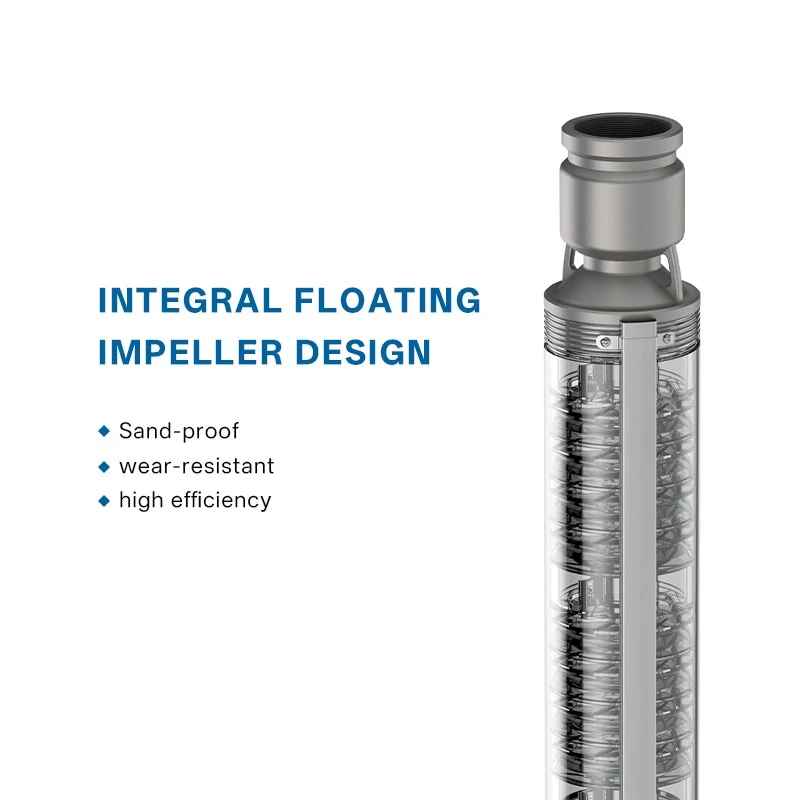
The design and construction of the pump play a significant role in determining its noise level. Pumps with well - engineered impellers and motors tend to operate more quietly. For example, pumps with balanced impellers reduce vibrations, which are a major source of noise. High - quality materials used in the construction of the pump can also dampen noise. Our Submersible Well Pump is designed with precision - engineered components to minimize noise and ensure smooth operation.
2. Pump Size and Power
Larger and more powerful pumps generally produce more noise than smaller ones. This is because they have larger motors and impellers that require more energy to operate, which can result in increased vibrations and noise. However, the relationship between size, power, and noise is not always linear. Modern pump designs can often achieve high power output with relatively low noise levels.
3. Installation
Proper installation is crucial for minimizing the noise level of a submersible well pump. If the pump is not installed correctly, it can cause excessive vibrations that are transmitted through the well casing and pipes, leading to increased noise. For example, if the pump is not properly centered in the well or if the pipes are not securely fastened, it can create a rattling or humming sound. It is recommended to have a professional installer set up the pump to ensure proper installation and reduce noise.
4. Water Conditions
The conditions of the water in the well can also affect the noise level of the pump. If the water contains a lot of sediment or debris, it can cause the pump to work harder, leading to increased noise. Additionally, air bubbles in the water can cause cavitation, which is a phenomenon where vapor bubbles form and collapse within the pump, creating a loud popping or cracking sound.
Measuring the Noise Level of Submersible Well Pumps
The noise level of a submersible well pump is typically measured in decibels (dB). Decibels are a logarithmic unit that measures the intensity of sound. A whisper is about 30 dB, normal conversation is around 60 dB, and a lawnmower can produce noise levels of up to 90 dB.

When measuring the noise level of a submersible well pump, it is important to measure it at a standard distance from the pump. In most cases, the noise level is measured at a distance of 1 meter from the pump. This allows for a consistent and comparable measurement across different pumps.
Most submersible well pumps have a noise level ranging from 40 dB to 70 dB. Pumps with a lower noise level are generally considered quieter and more suitable for applications where noise is a concern, such as in residential areas.
Noise Levels of Our Submersible Well Pumps
At our company, we understand the importance of providing quiet - operating pumps, especially for residential customers. Our submersible well pumps are designed to operate with low noise levels, typically in the range of 45 dB to 60 dB. This means that our pumps are relatively quiet compared to many other pumps on the market, and they will not cause significant disturbance in your home or workplace.
The 6SJ Best - Selling Water Pump By LISHIBA is one of our quietest models. It is engineered with advanced noise - reduction technology, including a well - balanced impeller and a noise - dampening motor housing. This pump is ideal for residential applications where a quiet water supply is desired.
Tips for Reducing the Noise Level of Submersible Well Pumps
If you already have a submersible well pump and you want to reduce its noise level, here are some tips:
1. Check the Installation
As mentioned earlier, proper installation is key. Make sure the pump is correctly centered in the well and that all pipes are securely fastened. If there are any loose connections, tighten them to reduce vibrations.
2. Use Noise - Dampening Materials
You can use noise - dampening materials around the pump and pipes to absorb sound. For example, you can wrap the pipes with acoustic insulation or place rubber pads under the pump to reduce vibrations.
3. Clean the Well
Regularly clean the well to remove sediment and debris. This will reduce the load on the pump and help it operate more quietly.
Conclusion
The noise level of a submersible well pump is an important consideration, especially for applications where noise can be a nuisance. By understanding the factors that affect the noise level, how to measure it, and how to reduce it, you can make an informed decision when choosing a submersible well pump.
Our company is committed to providing high - quality submersible well pumps with low noise levels. Whether you need a pump for your home, farm, or industrial facility, we have the right solution for you. If you are interested in learning more about our products or would like to discuss your specific water supply needs, please feel free to contact us. We look forward to working with you and helping you find the perfect submersible well pump for your application.
References
- Hydraulic Institute. "Pump Noise and Vibration: Causes and Cures."
- ASME (American Society of Mechanical Engineers) standards on pump performance and noise.


