

In the realm of control systems, understanding the difference between open - loop and closed - loop controllers is fundamental. As a controller supplier, I've witnessed firsthand how these two types of controllers serve different needs in various applications. This blog aims to delve into the characteristics, advantages, disadvantages, and typical use cases of both open - loop and closed - loop controllers.
Open - Loop Controllers
An open - loop controller, also known as a non - feedback controller, operates without considering the actual output of the system. It simply follows a pre - determined set of instructions or a fixed input. The controller generates an output based on the input signal it receives, without taking into account whether the output has achieved the desired result.
How Open - Loop Controllers Work
Let's take a simple example of a washing machine. The washing machine's controller is programmed to run the washing cycle for a specific amount of time, regardless of the actual dirtiness of the clothes. It doesn't measure the cleanliness of the clothes during the process; it just follows the pre - set time and water flow instructions.
Mathematically, if the input to an open - loop controller is (x(t)) and the transfer function of the controller is (G(s)), the output (y(t)) is given by (y(t)=G(s)x(t)). There is no feedback mechanism to adjust the output based on the actual state of the system.
Advantages of Open - Loop Controllers
- Simplicity: Open - loop controllers are relatively simple in design and implementation. They do not require complex sensors or feedback loops, which reduces the cost and complexity of the system. For example, in a simple traffic light system, the controller switches the lights at fixed intervals without needing to sense the actual traffic flow.
- Low Cost: Since they have fewer components compared to closed - loop controllers, open - loop controllers are generally more cost - effective. This makes them suitable for applications where cost is a major concern and a high level of accuracy is not required.
- Fast Response: Without the need to wait for feedback and make adjustments, open - loop controllers can provide a quick response to the input signal. This is beneficial in applications where a rapid response is crucial, such as in some industrial conveyor belt systems.
Disadvantages of Open - Loop Controllers
- Lack of Adaptability: Open - loop controllers cannot adapt to changes in the system or external disturbances. If there are variations in the load, environmental conditions, or other factors, the output may deviate significantly from the desired value. For instance, in a heating system that uses an open - loop controller, if the outside temperature drops suddenly, the controller will not adjust the heating output accordingly.
- Inaccuracy: They are less accurate compared to closed - loop controllers because they do not account for errors in the output. This can lead to sub - optimal performance in applications where precision is important, such as in robotic arm control.
Typical Applications of Open - Loop Controllers
- Household Appliances: Many household appliances, such as toasters, electric kettles, and simple fans, use open - loop controllers. These appliances operate based on pre - set time or power levels without adjusting to the actual state of the object being heated or cooled.
- Industrial Automation: In some industrial processes where the operating conditions are relatively stable, open - loop controllers can be used. For example, in a simple assembly line where the speed of the conveyor belt is set at a fixed value.
Closed - Loop Controllers
A closed - loop controller, also known as a feedback controller, continuously monitors the output of the system and compares it with the desired setpoint. Based on the difference between the actual output and the setpoint (known as the error), the controller adjusts its output to minimize the error.
How Closed - Loop Controllers Work
Consider a temperature control system in a room. The controller has a setpoint for the desired temperature. A temperature sensor measures the actual temperature in the room and sends this information back to the controller. If the actual temperature is lower than the setpoint, the controller increases the heating output; if it is higher, the controller reduces the heating output.
Mathematically, if the setpoint is (r(t)), the actual output is (y(t)), the error (e(t)=r(t)-y(t)). The controller then uses this error to generate an output (u(t)) based on its control algorithm, and the system output (y(t)) is a function of (u(t)).
Advantages of Closed - Loop Controllers
- High Accuracy: Closed - loop controllers can achieve a high level of accuracy because they continuously adjust the output to minimize the error between the actual output and the setpoint. This makes them suitable for applications where precision is critical, such as in medical equipment and aerospace systems.
- Adaptability: They can adapt to changes in the system or external disturbances. For example, in a robotic arm control system, if an unexpected load is added to the arm, the closed - loop controller can adjust the motor commands to maintain the desired position and movement.
- Stability: Closed - loop controllers can improve the stability of the system. By continuously monitoring and adjusting the output, they can prevent the system from going out of control due to disturbances or changes in the operating conditions.
Disadvantages of Closed - Loop Controllers
- Complexity: Closed - loop controllers are more complex in design and implementation compared to open - loop controllers. They require sensors to measure the output, a feedback loop to transmit the information, and a control algorithm to process the error and generate the appropriate output. This increases the cost and complexity of the system.
- Cost: The additional components, such as sensors and feedback circuits, make closed - loop controllers more expensive than open - loop controllers. This can be a limiting factor in applications where cost is a major concern.
- Potential for Instability: If the control algorithm is not properly designed, closed - loop controllers can become unstable. Oscillations or even system failure can occur if the feedback loop amplifies the error instead of reducing it.
Typical Applications of Closed - Loop Controllers
- Industrial Process Control: In chemical plants, power plants, and manufacturing facilities, closed - loop controllers are widely used to control variables such as temperature, pressure, flow rate, and level. For example, in a chemical reactor, a closed - loop controller can maintain the temperature and pressure at the desired values to ensure the quality of the chemical reaction.
- Automotive Systems: Many automotive systems, such as engine control units (ECUs), anti - lock braking systems (ABS), and cruise control systems, use closed - loop controllers. These controllers help to improve the performance, safety, and fuel efficiency of the vehicle.
Comparison in the Context of Our Controller Offerings
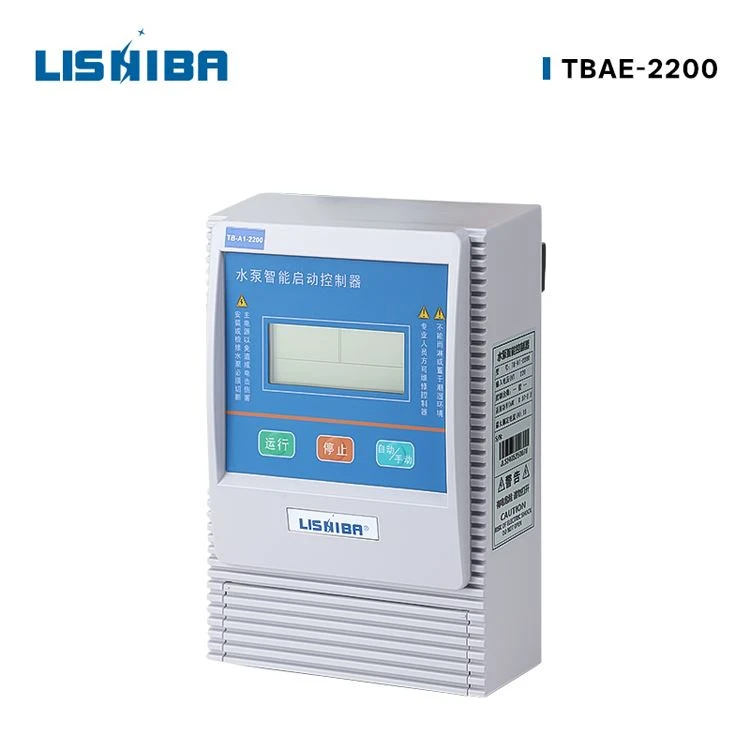
As a controller supplier, we offer a range of products to meet different customer needs. Our Three - Phase Intelligent Controller for Submersible Pumps can be configured as either an open - loop or a closed - loop controller depending on the application requirements. In a situation where the water level in a well is relatively stable and the pump is required to operate at a fixed speed, an open - loop configuration can be used for simplicity and cost - effectiveness. However, if the water level fluctuates or the pump needs to be adjusted based on the actual flow rate, a closed - loop configuration can provide better performance and energy efficiency.
Similarly, our Single - Phase Intelligent Controller can also be tailored to different control strategies. For applications where a simple on - off control is sufficient, an open - loop mode can be selected. But for applications that require precise control of parameters such as voltage or current, a closed - loop mode can be employed.

Conclusion and Call to Action
In conclusion, the choice between an open - loop and a closed - loop controller depends on various factors, including the application requirements, cost constraints, and the level of accuracy and adaptability needed. Open - loop controllers are suitable for simple, cost - sensitive applications where a high level of accuracy is not required, while closed - loop controllers are better suited for applications that demand precision, adaptability, and stability.
If you are in need of a controller for your specific application, we are here to help. Our team of experts can assist you in selecting the right controller and configuring it to meet your needs. Whether you need an open - loop or a closed - loop controller, we have the products and expertise to provide you with a reliable solution. Contact us today to start a discussion about your controller requirements and explore how our products can benefit your operations.
References
- Dorf, R. C., & Bishop, R. H. (2017). Modern Control Systems. Pearson.
- Ogata, K. (2010). Modern Control Engineering. Prentice Hall.


