

Hey there! As a controller supplier, I often get asked about how fan controllers work. It's a pretty interesting topic, and I'm excited to break it down for you in this blog post.
The Basics of a Fan Controller
First off, let's talk about what a fan controller actually is. In simple terms, a fan controller is a device that helps regulate the speed and operation of fans. Fans are used in a wide range of applications, from cooling computer components to ventilating large industrial spaces. And that's where the fan controller comes in handy.
The main job of a fan controller is to adjust the fan speed based on certain conditions. For example, in a computer, the temperature of the CPU or GPU can get really high during intensive tasks like gaming or video editing. A fan controller can sense these temperature changes and increase the fan speed to cool things down. On the other hand, when the temperature drops, it can slow the fans down to save energy and reduce noise.
Components of a Fan Controller
Now, let's take a look at the key components that make up a fan controller.
Sensors
Sensors are like the eyes and ears of the fan controller. They constantly monitor different parameters, such as temperature, humidity, or air pressure. In most cases, temperature sensors are the most commonly used. These sensors can be placed near the components that need to be cooled, like the CPU in a computer or the motor in an industrial machine.
There are different types of temperature sensors, but one of the most popular ones is the thermistor. A thermistor is a type of resistor whose resistance changes with temperature. As the temperature goes up, the resistance of the thermistor changes, and this change is detected by the fan controller. Based on this information, the controller can then decide whether to increase or decrease the fan speed.
Microcontroller
The microcontroller is the brain of the fan controller. It receives the data from the sensors and processes it to make decisions about the fan speed. It's a small computer on a chip that can run programs and algorithms.
The microcontroller has a set of pre - programmed rules that tell it how to respond to different sensor readings. For example, if the temperature sensor reports a temperature above a certain threshold, the microcontroller will send a signal to increase the fan speed. It can also adjust the fan speed in a more gradual way, depending on how quickly the temperature is rising or falling.
Power Circuit
The power circuit is responsible for providing the right amount of power to the fans. It takes the electrical power from the main power source, like a power supply unit in a computer or an electrical outlet in an industrial setting, and converts it into a suitable voltage and current for the fans.
The power circuit can also control the amount of power delivered to the fans. It does this by using techniques like pulse - width modulation (PWM). PWM is a method of controlling the average power delivered to a device by rapidly switching the power on and off. By changing the width of the pulses (the on - time compared to the off - time), the power circuit can control the speed of the fans.
How Fan Controllers Work in Different Applications
Computer Systems
In a computer, fan controllers play a crucial role in keeping the components cool. Most modern motherboards come with built - in fan controllers. These controllers are connected to the CPU and other components through temperature sensors.
When you start running a demanding application, like a game or a 3D modeling program, the CPU starts working hard and generates a lot of heat. The temperature sensors detect this increase in temperature and send the data to the motherboard's fan controller. The microcontroller in the controller then decides to increase the fan speed by adjusting the PWM signal sent to the fans.
This not only helps prevent the CPU from overheating but also extends the lifespan of the components. And when you close the application and the CPU temperature drops, the fan controller reduces the fan speed to save energy and make the computer quieter.
Industrial Ventilation
In industrial settings, fan controllers are used to ventilate large spaces and remove heat, dust, and fumes. For example, in a factory, there may be multiple fans installed to keep the air circulating and maintain a safe working environment.
Industrial fan controllers are often more complex than those used in computers. They may have multiple sensors to monitor different parameters, such as air quality, humidity, and temperature in different parts of the factory. The microcontroller in these controllers can be programmed to control the fans based on a combination of these factors.
For instance, if the air quality sensor detects high levels of dust or harmful gases, the fan controller will increase the fan speed to remove the contaminants from the air. It can also be set up to work in a coordinated way with other ventilation systems in the factory.
Our Fan Controller Products
As a controller supplier, we offer a wide range of high - quality fan controllers. One of our popular products is the Single - Phase Intelligent Controller. This controller is designed for single - phase fans and offers precise control over the fan speed. It's easy to install and can be used in a variety of applications, from small home appliances to single - phase industrial fans.
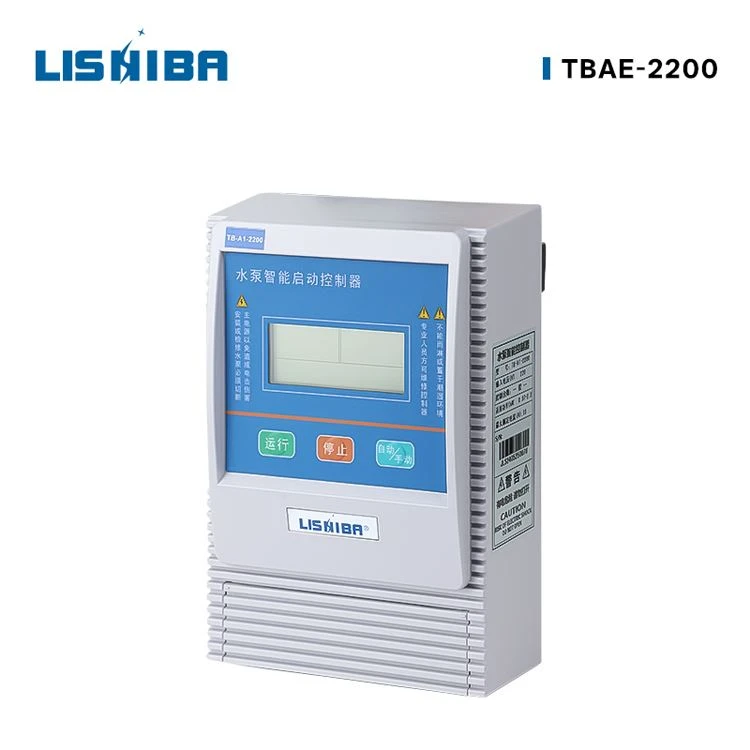
Another great product is our Three - Phase Intelligent Controller for Submersible Pumps. This controller is specifically designed for submersible pumps, which are often used in water supply and drainage systems. It can monitor the pump's operating conditions, such as temperature and pressure, and adjust the fan speed accordingly to ensure the pump runs efficiently and reliably.
Why Choose Our Fan Controllers
Our fan controllers are built with the latest technology and high - quality components. They offer accurate sensor readings, reliable microcontrollers, and efficient power circuits. This means that you can trust our controllers to provide precise and consistent control over your fans.
We also provide excellent customer support. If you have any questions about our products or need help with installation and setup, our team of experts is always ready to assist you.
Contact Us for Purchase and洽谈
If you're interested in our fan controllers or have any specific requirements for your application, don't hesitate to get in touch with us. We're always looking forward to working with new customers and helping them find the right controller solutions. Whether you're a small business or a large industrial company, we have the products and expertise to meet your needs.

References
- "Fundamentals of Electric Circuits" by Charles K. Alexander and Matthew N. O. Sadiku
- "Microcontrollers: From Assembly Language to C Using the PIC24 Family" by John B. Peatman


