

Hey there! As a supplier of Residential Well Pumps, I often get asked, "How deep can a residential well pump draw water?" It's a great question, and the answer isn't as straightforward as you might think. In this blog post, I'll break down the factors that determine how deep a well pump can go and give you some insights to help you make the right choice for your home.
Understanding the Basics
First off, let's talk about the two main types of residential well pumps: shallow well pumps and deep well pumps. Shallow well pumps are designed to draw water from wells that are less than 25 feet deep. They work by creating a vacuum that sucks water up from the well and into the pump. On the other hand, deep well pumps are used for wells that are deeper than 25 feet. These pumps are typically submersible, meaning they're placed underwater in the well and push water up to the surface.
Factors Affecting Pump Depth
Now, let's dive into the factors that can affect how deep a residential well pump can draw water.

Pump Type and Design
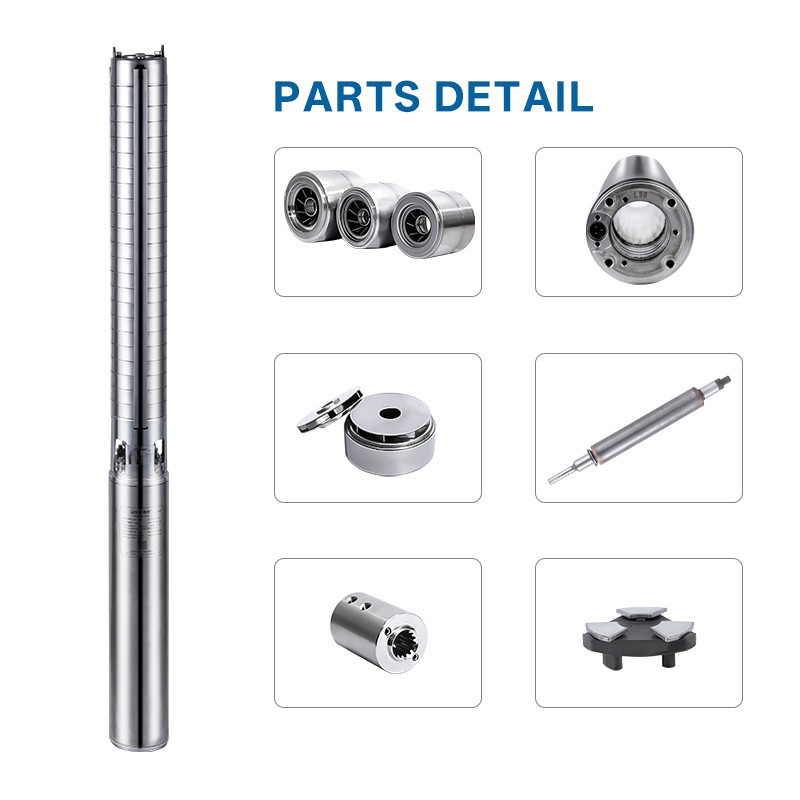
The type and design of the pump play a huge role in its maximum depth capacity. As I mentioned earlier, shallow well pumps are limited to around 25 feet due to the way they create a vacuum. Deep well pumps, on the other hand, can reach much greater depths. For example, some of the High Head Submersible Pumps we offer can draw water from depths of up to 400 feet or more. These pumps are specifically designed to handle the high pressure and resistance associated with pumping water from deep wells.
Water Pressure and Flow Rate
Another important factor is the water pressure and flow rate required at your home. The deeper the well, the more pressure the pump needs to generate to push the water up to the surface. If you have a high demand for water, such as multiple bathrooms or a large garden, you'll need a pump that can deliver a sufficient flow rate at the required pressure. Our Stainless Steel Submersible Water Pump is a great option for homes with high water demands, as it can provide a consistent flow of water even from deep wells.
Well Conditions
The conditions of your well also matter. If the well has a narrow diameter or is filled with sediment, it can restrict the flow of water and reduce the pump's efficiency. Additionally, the water level in the well can fluctuate depending on the season and local water table. A pump that's designed to handle these variations is essential to ensure reliable water supply. Our Solar Well Pump System is a great choice for wells with variable water levels, as it can adjust its pumping rate based on the available water.
Power Source
The power source of the pump can also impact its depth capacity. Electric pumps are the most common type of residential well pumps, but they require a reliable electrical supply. If you live in an area with frequent power outages, you might want to consider a solar-powered pump, like our Solar Well Pump System. These pumps are powered by solar panels, which means they can operate even when the grid is down. However, solar pumps may have some limitations in terms of their depth capacity and flow rate, depending on the size of the solar panels and the amount of sunlight available.
Choosing the Right Pump for Your Well
So, how do you choose the right pump for your well? Here are some steps to help you make an informed decision:
Determine Your Water Needs
Start by calculating your daily water usage. Consider factors such as the number of people in your household, the number of bathrooms, and any other water-consuming appliances or fixtures. This will give you an idea of the flow rate and pressure you need from your pump.
Measure Your Well Depth
Use a well depth measuring tool or consult your well driller to determine the depth of your well. This will help you decide whether a shallow well pump or a deep well pump is the right choice for you.
Consider Your Budget
Pumps come in a wide range of prices, depending on their type, size, and features. Set a budget for your pump purchase and look for options that meet your needs within that budget. Keep in mind that investing in a high-quality pump can save you money in the long run by reducing maintenance and energy costs.
Research Pump Brands and Models
Do some research on different pump brands and models to find one that has a good reputation for reliability and performance. Read customer reviews and compare features and prices to find the best fit for your well and water needs.
Conclusion
In conclusion, the depth a residential well pump can draw water depends on several factors, including the pump type and design, water pressure and flow rate, well conditions, and power source. By understanding these factors and following the steps outlined above, you can choose the right pump for your well and ensure a reliable water supply for your home.
If you have any questions or need help choosing the right pump for your well, don't hesitate to reach out. We're here to help you make the best decision for your home. Whether you're looking for a Solar Well Pump System, High Head Submersible Pumps, or a Stainless Steel Submersible Water Pump, we've got you covered. Let's start the conversation and find the perfect solution for your well!
References
- "Well Pumps: How They Work and What to Consider." HomeAdvisor.
- "Choosing the Right Well Pump for Your Home." The Spruce.
- "Residential Well Pumps: A Buyer's Guide." Family Handyman.


